

Dental anxiety affects an estimated 30 to 40 million people in the United States. If visits to the dentist cause you stress or keep you from getting routine care, Fresh Dental Group offers professional, evidence-based sedation options designed to make treatment calm and manageable. Our goal is to remove fear as a barrier so patients can get the care they need with dignity and confidence.
Skipping dental visits because of anxiety can let small problems become bigger ones. Sedation calms the mind and reduces sensory awareness, while local anesthesia blocks pain at the source; together they make it possible to complete more comprehensive care in fewer visits. We tailor every sedation plan to your medical history, level of anxiety, and the time required for treatment, and our clinicians monitor vital signs and adjust medication levels throughout, from check-in through recovery.
Sedation is a spectrum that ranges from mild relaxation to deeper states where memory of the procedure may be limited. It’s not a single technique but a suite of options matched to your anxiety level, medical background, and the complexity of the work. The aim is comfort, not unconsciousness; general anesthesia, a deeper medically induced sleep, is reserved for specific circumstances and typically administered in a hospital setting.
People choose sedation for many sensible reasons. Some have longstanding dental phobia that keeps them from care entirely; others feel overwhelmed by specific procedures. When a large amount of work must be completed, sedation lets patients tolerate longer appointments comfortably, which often means fewer visits overall. Practical issues matter too: a pronounced gag reflex, hypersensitive teeth and gums, or motor or cognitive challenges that make it difficult to remain still are all legitimate reasons to consider sedation. It can also help young children and patients with special needs receive care that would otherwise be out of reach. Before recommending anything, the care team reviews your health history, current medications, and any previous reactions to sedatives or anesthesia.
Conscious sedation allows you to keep breathing on your own and respond to verbal cues while feeling deeply relaxed. Heart rate and breathing are closely monitored, and the depth of sedation can often be adjusted in real time. It is offered in several well-established forms, chosen based on how much relaxation is needed, how long the procedure will last, and your medical considerations.
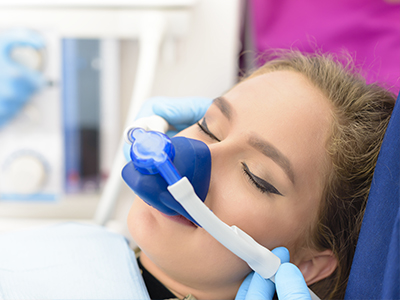
Nitrous oxide, commonly called "laughing gas," is a mild sedative delivered through a small mask. It reduces anxiety quickly, is easy to control, and wears off rapidly after treatment stops, making it a popular option for shorter visits.
Oral sedation involves a prescribed medication taken before your appointment to produce a deeper state of relaxation. Timing and dosage are customized, and because effects can linger, a responsible adult must escort you to and from the office.
Preparation varies by sedation type. Nitrous oxide typically requires minimal preparation, while oral sedation often involves fasting and temporary changes to routine medications. Your care team will provide clear, written instructions so you know exactly how to prepare, and after treatment you will be observed until it is safe to leave. Anyone who has received oral sedation should be driven home and remain with a trusted adult until the effects have fully worn off.
Sedation dentistry exists to remove fear and restore access to essential dental care. If anxiety has kept you from getting the treatment you need, our team can explain the options, evaluate your candidacy, and create a plan that respects your comfort and safety. For more information or to discuss whether sedation is right for you, please contact us for assistance.
Sedation dentistry uses safe, controlled medications to help patients relax during dental procedures. It is intended for people who experience significant anxiety, have a strong gag reflex, need extensive treatment, or have difficulty sitting for care. Sedation reduces fear and can make appointments more manageable while local anesthesia still prevents pain in the treated area.
Depending on the method chosen, sedation can produce anything from mild relaxation to a deeper, sleep-like state while the patient remains monitored and responsive to the care team. Many patients report little to no memory of the procedure, which can reduce future avoidance of dental care. Your dental team will explain expected effects so you know what to expect before, during, and after treatment.
Local anesthesia numbs a specific tooth or area and prevents pain but does not alter a patient's level of anxiety or consciousness. Sedation dentistry adds medications that calm nerves and, in some cases, produce drowsiness while the patient remains able to respond to verbal commands. This combination allows clinicians to manage both comfort and anxiety during procedures.
General anesthesia produces a deep, controlled unconsciousness and is typically provided in a hospital setting by an anesthesiologist for complex medical or surgical cases. For most dental procedures, conscious sedation administered in the dental office is sufficient and safer for patients who only need anxiety control or moderate sedation. Your dentist can help determine which approach is most appropriate based on medical history and the scope of treatment.
Common conscious sedation options include inhalation sedation with nitrous oxide and oral sedation using prescribed medication. Nitrous oxide is rapid-onset and rapidly reversible, while oral sedation is convenient and produces a deeper, noticeable level of relaxation for patients who need more than nitrous oxide alone. Both are used in combination with local anesthesia to prevent pain.
The choice of method depends on the patient's anxiety level, medical history, and the length or complexity of the procedure. Some methods require specific preparation such as fasting or arranging an escort to drive home after the visit. Your dental team will review options and provide clear pre-appointment instructions tailored to the chosen method.
At Fresh Dental Group, candidates for sedation dentistry often include patients with dental phobia, those who need extensive treatment in a single visit, people with a powerful gag reflex, and individuals who have difficulty remaining still due to disability or medical conditions. The decision to use sedation is personalized and begins with a comprehensive medical and dental evaluation to identify risks and determine the safest method. Age, current medications, chronic health conditions, and breathing disorders are all considered during screening.
Candidates also include patients whose anxiety has caused them to delay care, resulting in more complex needs; sedation can help them receive necessary treatment in a controlled, calm setting. For some children or medically complex patients, the dentist may recommend behavioral techniques, office-based sedation, or referral for hospital-based anesthesia if that is the safest option. Clear communication about medical history and current medications helps ensure a safe sedation plan.
Preparation varies with the type of sedation. For inhalation sedation you may eat normally unless otherwise instructed, while oral sedation often requires specific timing for medications and, in some cases, an empty stomach for several hours beforehand. Your dental team will provide written pre-appointment instructions, which commonly include guidance about fasting, which medications to take or avoid, and arrival time.
Patients should arrange for an escort to drive them home if required, wear comfortable clothing, and bring a list of current medications and medical conditions. Avoid alcohol or recreational drugs before the appointment and ask any questions about interactions with prescription medications. Following these instructions helps reduce risks and supports a smooth experience from arrival through recovery.
During sedation, the dental team continuously monitors vital signs such as heart rate, blood pressure, oxygen levels, and respiration to ensure safety and comfort. Local anesthetic is used to block pain in the treatment area while sedation medications manage anxiety and awareness. Patients under conscious sedation typically remain responsive to verbal cues, though they may feel drowsy and have limited recollection of the procedure.
Immediately after the appointment, recovery time depends on the sedation type: nitrous oxide wears off quickly, while oral sedation can take several hours to fully clear. The team will monitor you until it is safe to be released and will provide post-treatment instructions that cover eating, activity restrictions, and signs to watch for. Bringing an escort is required when discharge instructions indicate it, and the escort should be prepared to assist for the remainder of the day.
Sedation dentistry is safe when administered by trained clinicians following established protocols, appropriate patient screening, and continuous monitoring. Prior to treatment the dental team reviews medical history, current medications, allergies, and any conditions that could affect sedation safety such as sleep apnea or chronic respiratory problems. During the procedure, monitoring equipment and emergency supplies are available and staff maintain certification in airway management and life support.
Risk is minimized through careful selection of the sedation level that matches the procedure and the patient's health profile, incremental dosing when appropriate, and adherence to pre- and post-procedure instructions. Open communication about health changes, medication use, and past anesthesia experiences further reduces potential complications. If hospital-based general anesthesia is indicated, the dentist will coordinate care with an anesthesiologist and appropriate facility to ensure comprehensive oversight.
Sedation dentistry can be an effective tool for children and patients with special needs when behavioral techniques alone are insufficient to provide safe, effective dental care. The approach is individualized: mild inhalation sedation may be used for cooperative children, while oral sedation might be considered for those who need deeper relaxation. For some patients with complex medical or developmental needs, hospital-based general anesthesia may be the safest option.
Caregivers should share detailed medical and behavioral histories, current medications, and prior anesthesia experiences so the dental team can recommend the most appropriate setting and sedation level. The goal is to enable safe, complete treatment while minimizing stress for the patient and family. The practice will discuss logistics such as arrival times, pre-procedure preparations, and post-procedure supervision requirements.
Many patients experience partial or complete amnesia for the procedure, especially with deeper oral sedation, which means they remember little or nothing of the treatment. With conscious sedation the patient often remains able to follow simple verbal requests, allowing the dental team to work efficiently while the patient remains comfortable. Reduced memory and anxiety can make the overall experience less traumatic and encourage continued dental care in the future.
Your dentist will explain the expected level of awareness and memory associated with the chosen sedation option so you can set appropriate expectations. If being able to remember specific details is important to you, discuss this in advance so the team can select the method that best matches your preferences and clinical needs. Clear pre- and post-procedure instructions help ensure cooperation and a safe recovery.
Fresh Dental Group offers a comfort-first approach that pairs modern sedation options with careful patient screening and continuous monitoring to make dental care accessible for anxious or medically complex patients. Our team prioritizes clear communication, individualized treatment planning, and techniques designed to reduce fear and improve the overall experience. We provide care in our Fulton and Hampstead offices and tailor sedation choices to each patient's medical profile and treatment goals.
If sedation dentistry might help you receive needed care, our clinicians will review your medical history, explain recommended options, and provide practical instructions before and after treatment. The goal is to deliver safe, compassionate care so you can maintain oral health with less stress and greater confidence. Contact the office to schedule a consultation and learn which sedation method is most appropriate for your needs.
New Patients Welcome
Schedule online any time, or call the office directly. We accept most major PPO insurance plans and offer flexible financing.