


Full mouth dental implants replace an entire arch of missing or failing teeth with a permanent set anchored directly to the jaw. Instead of relying on adhesives or resting on the gums the way traditional dentures do, the new teeth are secured by titanium implants that function like natural tooth roots. The result looks, feels, and works like a healthy natural smile: patients bite into the foods they love, speak clearly, and smile without a second thought.
For people who have struggled for years with loose dentures, widespread decay, or advanced gum disease, full mouth implants are often the turning point. Rather than patching individual problems one tooth at a time, the entire arch is restored as a single, coordinated treatment plan. At Fresh Dental Group, that plan is delivered under one roof: from the first scan to the final set of teeth, the same team manages imaging, surgery, and the restorative work, so nothing is lost in a handoff between offices.
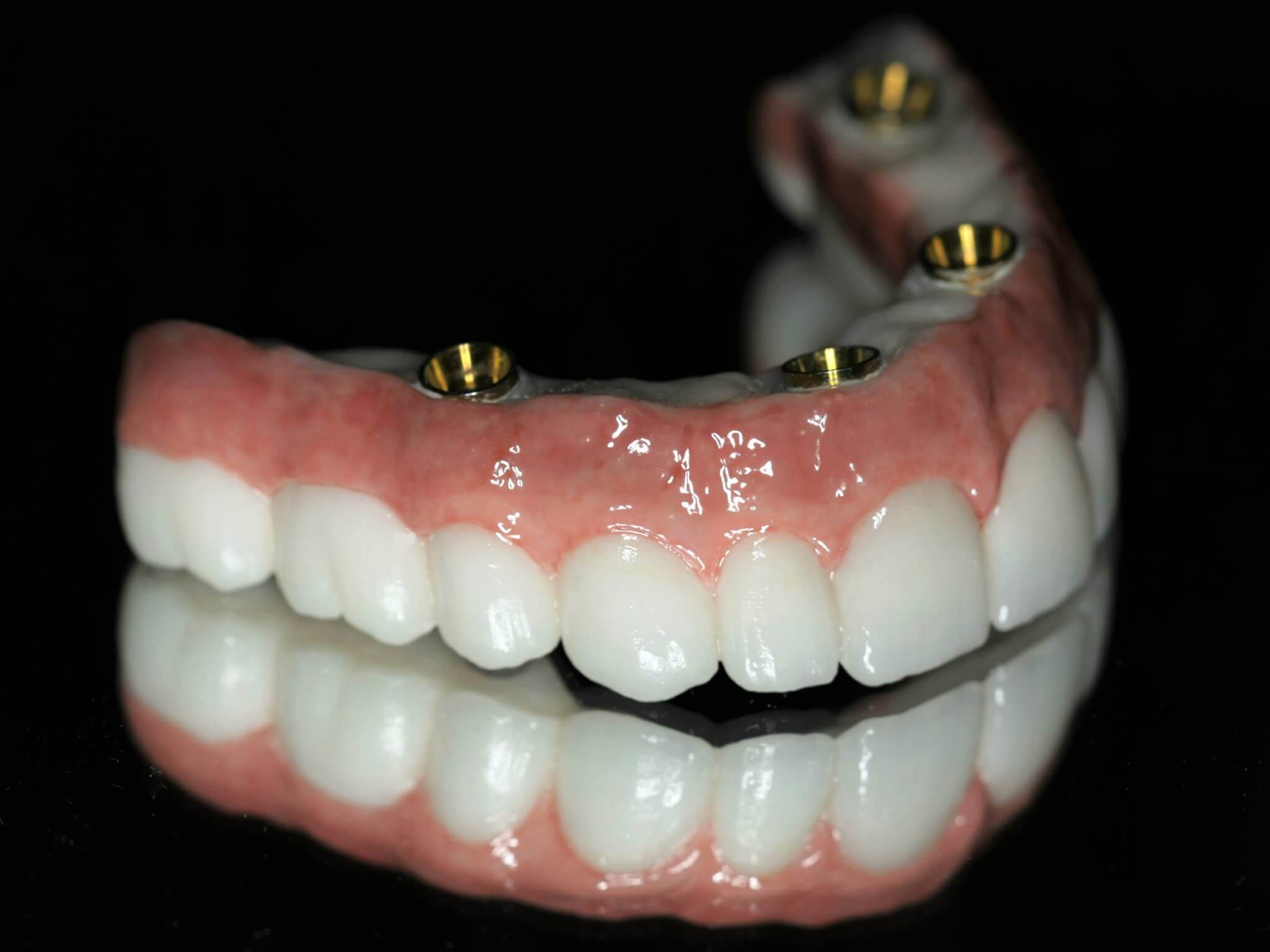
Full mouth dental implants is a category, not a single procedure, and the right design depends on your anatomy, health, and goals. A fixed implant bridge uses a series of implants to support a permanent, non-removable arch of teeth that only a dentist can take out. It is the closest experience to natural teeth and the most popular choice for patients who want to forget they ever lost a tooth.
An implant-supported overdenture takes a different approach: a removable prosthesis that snaps securely onto a smaller number of implants. It offers dramatically better stability than a conventional denture at a lower cost than a fixed bridge, and it can be removed for cleaning.
Techniques such as All-on-4® fit within this spectrum, using four strategically angled implants to support a full fixed arch, often without bone grafting. During your consultation, the doctor walks through each option with imaging of your own jaw in hand, so the recommendation is grounded in your bone volume, bite, and budget rather than a one-size-fits-all formula.

Treatment begins with a comprehensive evaluation: a clinical exam, digital X-rays or 3D CBCT imaging, and a candid conversation about your health history and what you want your smile to do for you. This diagnostic phase maps bone quality, identifies any teeth that need extraction, and shapes the design of your new arch before anything else happens.
On surgery day, comfort comes first. With sedation options available, the implants are placed according to the digital plan, and in many cases a provisional set of teeth is attached before you leave. Over the following months, the implants fuse with the jawbone in a process called osseointegration, creating the solid foundation for the final teeth.
Once healing is confirmed, the final prosthesis is crafted and fitted. This last stage is all refinement: adjusting the bite, contouring the gumline of the prosthesis, and matching shade and shape to your facial features so the finished smile looks like it has always been yours.
Most adults missing many or all of their teeth, or facing an arch that can no longer be saved, are candidates. Good general health, a commitment to daily hygiene, and realistic expectations matter more than age. Even patients told they lack bone for implants often have options thanks to modern angled-implant techniques and grafting procedures. Conditions like uncontrolled diabetes, active gum infection, heavy tobacco use, and some medications call for extra planning, but none automatically rules treatment out.
Implant-supported teeth are cared for much like natural ones: daily brushing, cleaning around the prosthesis with the tools your hygienist recommends, and regular professional visits. With consistent care, full mouth dental implants are designed to last decades, and the implants themselves can last a lifetime. Beyond durability, patients consistently describe the change in daily life: eating without planning around the menu, laughing freely, and retiring the denture adhesive for good.
1All-on-4 is a registered trademark of Nobel Biocare
To find out whether full mouth dental implants are right for you, contact Fresh Dental Group to schedule a personalized consultation.
Full mouth dental implants replace an entire arch of missing or failing teeth by anchoring a prosthesis to titanium implants placed in the jawbone. The implants function like natural tooth roots, providing a stable foundation for teeth that look, feel, and perform like natural dentition. This approach restores chewing efficiency, speech, and facial support in ways that traditional removable dentures often cannot.
Conventional dentures sit on the gums and may rely on adhesives or suction to stay in place, which can allow slipping and reduced biting force. Implant-supported solutions eliminate the need for adhesives and preserve bone by transmitting normal chewing forces to the jaw. For many patients, implants offer greater comfort, function, and long-term oral health compared with removable appliances.
Good candidates are adults who are missing many or all teeth or who have an arch of teeth that cannot be predictably saved by other restorative options. General health, commitment to daily oral hygiene, and realistic expectations about the process matter more than chronological age. Certain medical issues or medications, such as uncontrolled diabetes or immunosuppressive drugs, require careful planning but do not automatically rule a patient out.
A comprehensive evaluation determines candidacy, including clinical exam and 3D imaging to assess bone volume and anatomy. Patients who have been told they lack bone often still have options thanks to angled implant techniques and bone grafting. The treatment plan is individualized to balance long-term stability, function, and esthetics.
Evaluation begins with a detailed medical and dental history, clinical examination, and imaging such as digital x-rays and cone beam CT scans to map bone and anatomical structures. These diagnostics identify teeth that need extraction, measure bone volume, and reveal sinus or nerve positions that influence implant placement. A discussion of the patient's goals, function, and esthetic expectations guides the overall plan.
The team at Fresh Dental Group uses digital planning tools to design the implant positions and the final prosthesis before surgery, often producing a surgical guide for precise implant placement. Planning also defines whether provisional teeth will be attached immediately and whether grafting or staged procedures are required. Clear timelines and follow-up protocols are established so patients know what to expect throughout treatment.
On surgery day, implants are placed in the jawbone according to the digital treatment plan, often using a surgical guide for accuracy. Sedation options are available to help patients remain comfortable throughout the procedure, and a provisional prosthesis may be attached the same day in many cases. The implants themselves are titanium posts that serve as the foundation for the final restoration.
Osseointegration is the biologic process by which bone grows tightly around the implant, creating a stable, long-lasting connection. This healing phase typically takes several months and is essential before the final prosthesis is delivered. Regular follow-up visits monitor healing and ensure the implant is integrating as expected before final restoration and occlusal refinement.
A fixed implant bridge is a non-removable prosthesis secured to multiple implants and is designed to function very similarly to natural teeth. It offers the closest match to the feel and stability of natural dentition and can only be removed by a dental professional. This option is popular for patients who want a permanent solution that minimizes daily manipulation.
An implant-supported overdenture is a removable prosthesis that snaps onto a smaller number of implants, providing improved stability over conventional dentures and simpler home hygiene. Techniques such as All-on-4 use four strategically angled implants to support a fixed arch and can reduce the need for extensive grafting. The best choice depends on each patient's anatomy, hygiene preferences, and functional goals, and will be discussed during planning.
Immediately after surgery patients can expect some swelling, mild bruising, and soreness that are typically managed with medication, cold packs, and rest. Eating soft foods, avoiding strenuous activity, and following post-operative hygiene instructions help promote comfortable healing during the first few days to weeks. Smoking and certain medications can slow healing, so clinicians provide specific guidance to reduce complications.
Osseointegration usually continues over several months before the final prosthesis is placed, and many patients wear a provisional restoration to maintain function and esthetics during that period. Follow-up appointments verify bone healing, soft tissue health, and implant stability, and adjustments to interim restorations may be made as needed. By the time the final prosthesis is delivered, most patients enjoy significantly improved chewing ability and confidence.
Implant-supported teeth are cared for using a daily routine similar to natural teeth: thorough brushing, cleaning around the prosthesis with recommended instruments, and flossing or using interdental cleaners as advised. While the prosthetic teeth cannot develop cavities, the gum tissue and bone around implants remain susceptible to inflammation and infection if not maintained. Regular professional cleanings and periodontal assessments are essential to detect early issues.
With consistent home care and routine dental visits, implants and their restorations are designed to last many years and often decades, and the titanium implants themselves can last a lifetime. Longevity depends on factors such as oral hygiene, medical conditions, smoking status, and regular maintenance. Proactive care and early intervention for any problems are key to preserving implant health long term.
As with any surgical procedure, implant treatment carries potential risks including infection, bleeding, implant failure, and damage to adjacent teeth or nerves. Peri-implantitis, an inflammatory condition affecting the tissues around implants, can lead to bone loss if not treated promptly. Careful planning, sterile technique, and patient adherence to hygiene recommendations reduce the likelihood of complications.
Certain factors raise the risk profile, such as smoking, poorly controlled systemic disease, prior radiation therapy, or inadequate oral hygiene. The surgeon will review individual medical and dental history and discuss how risks can be mitigated through preparatory procedures, staged approaches, or close post-operative monitoring. When complications arise they are addressed with evidence-based interventions to preserve function and health.
Many long-term denture wearers are excellent candidates for implant-based full-arch solutions, and modern implant techniques make it possible to treat patients who have experienced bone loss. Options such as angled implants, short implants, and the All-on-4 approach can often avoid extensive grafting by using available bone more efficiently. A cone beam CT scan clarifies bone quantity and quality so the team can recommend appropriate strategies.
When bone volume is insufficient for the desired implant positions, grafting procedures and sinus lifts can rebuild support and enable implant placement. Treatment may be staged to allow graft maturation before implants are placed, or a hybrid approach may be selected to balance invasiveness and outcomes. The chosen pathway focuses on predictable integration and long-term stability tailored to the individual's anatomy and goals.
To explore full mouth dental implant options you can schedule a consultation by calling the office or using the online booking option shown on the practice website for the Maple Lawn and Hampstead locations. At your appointment expect a review of your medical and dental history, a clinical exam, and digital imaging to guide treatment planning. The team will discuss treatment timelines, surgical steps, sedation options, and what the temporary and final restorations will involve.
Bring a photo ID, a list of current medications, and your dental insurance card if you have one, and bring any recent dental records or x-rays if available. Being prepared with questions about function, esthetics, and post-operative care helps you make an informed decision during the consultation. After evaluation, the clinician will outline personalized next steps and answer any remaining concerns.
New Patients Welcome
Schedule online any time, or call the office directly. We accept most major PPO insurance plans and offer flexible financing.
